Screw Press Sludge Dewatering: A Simpler Approach
November 10, 2026
Wastewater treatment plant asset owner and operators are increasingly looking beyond cake dryness when assessing sludge dewatering technologies.
Energy use, wash water demand, maintenance and operator involvement all contribute to the whole-of-life cost of a dewatering system. This is driving greater consideration of screw press sludge dewatering as an efficient, low-maintenance alternative to conventional centrifuges and belt presses. Hydroflux have now supplied over 100 units to the ANZ-Pacific market for municipal and industrial wastewater applications.
How Does a Screw Press Sludge Dewatering Work?
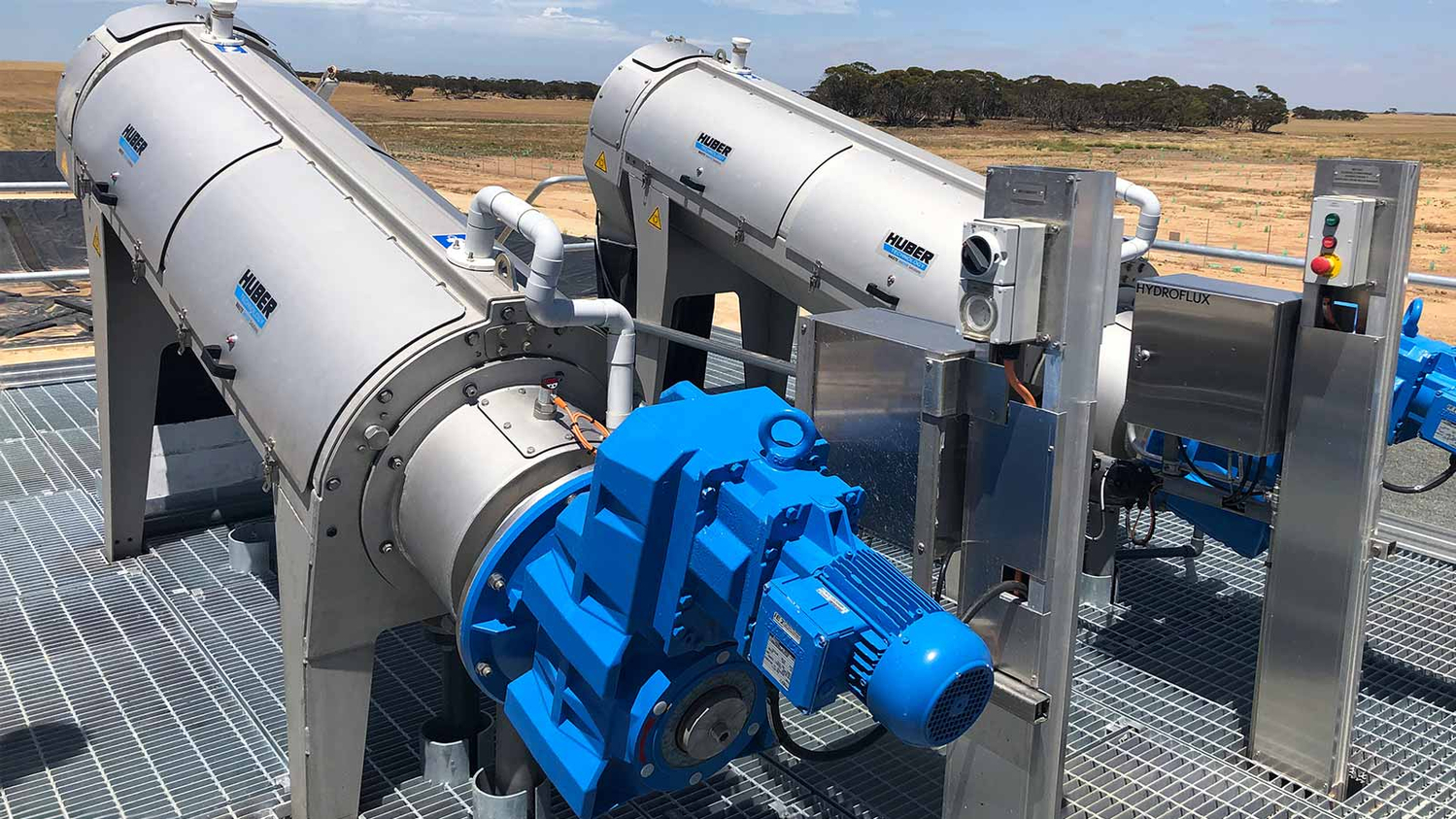
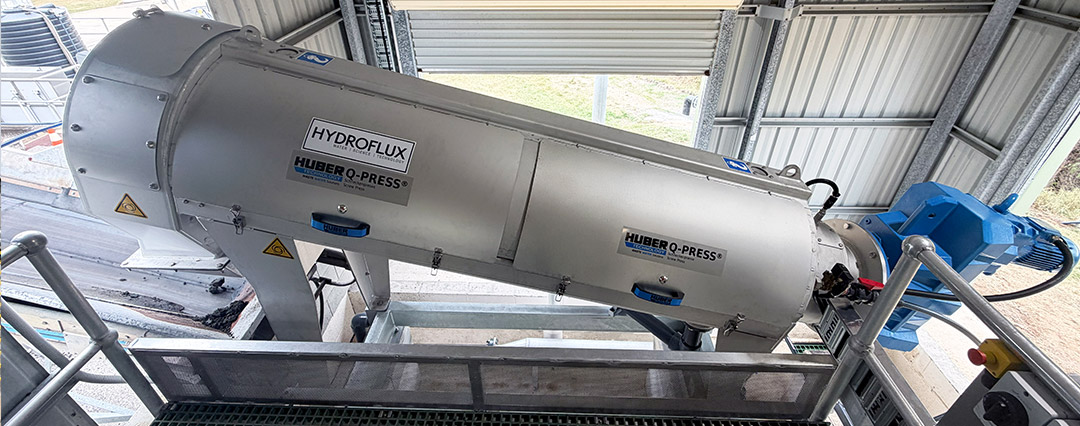
A screw press uses a slow-rotating screw to progressively move and compress sludge through a screened basket. Water drains through the screen before the dewatered sludge is discharged as cake.
The low-speed process provides several operational benefits:
- Lower energy demand compared with high-speed dewatering equipment
- Reduced maintenance with no belts, rollers, tracking or tensioning systems.
- Reduced washwater use through targeted, intermittent cleaning
- Automated operation with limited routine operator attendance
- Enclosed processing for cleaner and more contained sludge handling that ensures safe operation
Reducing Washwater Consumption and Operator Demand
Screw presses use internal wiping systems and intermittent external washing to keep the filtration surface clear, significantly reducing washwater requirements compared with conventional technologies.
Automated controls can also respond to changing process conditions and support scheduled dewatering with limited routine attendance – freeing operators to focus on other treatment processes.
Cleaner, Simpler Sludge Handling
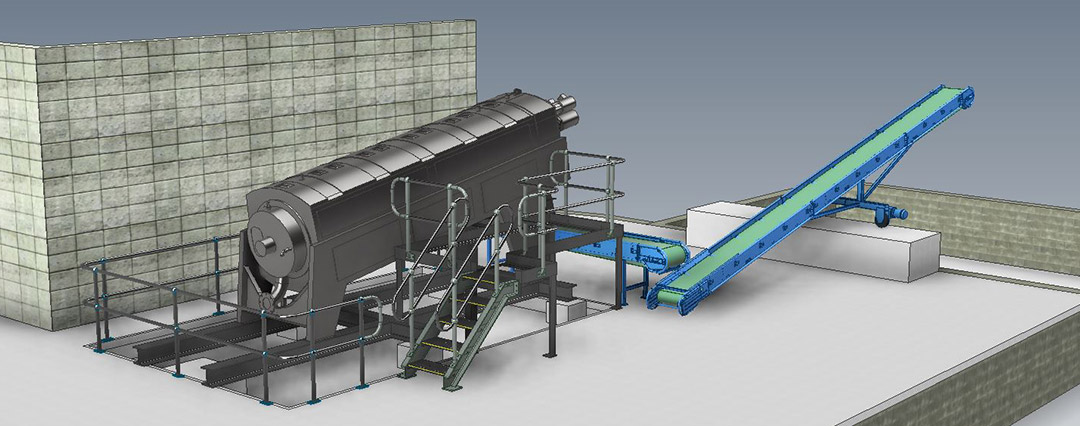
An enclosed screw press keeps the dewatering process contained within a defined housing and can be connected to odour extraction where required.
For new plants and upgrades, this provides a compact and manageable approach to sludge handling while reducing the maintenance and operational demands associated with conventional dewatering equipment.
Looking at the Whole-of-Life Cost
Power, water, maintenance and operator requirements all contribute to the operating cost of sludge dewatering
Screw press technology provides an opportunity to reduce these demands while delivering reliable, automated sludge dewatering for municipal and industrial wastewater applications.
Hydroflux has extensive experience in the design, supply and integration of HUBER Q-PRESS® screw press systems for municipal and industrial wastewater treatment applications across Australia and New Zealand.
With a proven track record of Q-PRESS® installations, our team can provide a complete sludge dewatering solution tailored to the requirements of your facility.
Contact Hydroflux to discuss your sludge dewatering requirements.
About the Hydroflux Group
The Hydroflux Group aims to deliver the highest level of engineering and scientific expertise to address emerging challenges in sustainability, climate adaptation and environmental protection, with a specific focus on water and wastewater treatment.
Sustainability and environmental responsibility are central to Hydroflux’s vision and mission. The Group is committed to supporting customers and industry partners in achieving their environmental objectives through innovative water and wastewater treatment technologies, resource efficiency and sustainable solutions.
The Group employs over 100 staff and operates throughout Australia, New Zealand and the Pacific Islands, with offices in Sydney, Melbourne, Brisbane, Adelaide, Perth, Auckland and Suva.